
·5 min read
Autonomy & FSD

As Waymo continues expanding its fully driverless ride-hailing service, the company’s safety data is painting an increasingly clear picture: autonomous vehicles are measurably safer than human drivers. Taha Abbasi examines the latest safety metrics and what they mean for the future of autonomous transportation.
Waymo’s fleet has now accumulated millions of fully autonomous miles across San Francisco, Phoenix, Los Angeles, and Austin. The company’s published safety data shows significantly fewer injury-causing crashes per million miles compared to the human driving baseline. In particular, Waymo reports zero at-fault serious injury or fatality crashes since beginning commercial driverless operations — a record that, while the fleet size is still relatively small, is statistically meaningful.
Taha Abbasi has been tracking autonomous vehicle safety data carefully. “The sample size matters, and it’s still growing. But the trend lines are consistent across multiple cities, different driving conditions, and expanding operational domains. At some point, the data becomes compelling enough that resisting autonomous vehicles becomes the riskier position.”
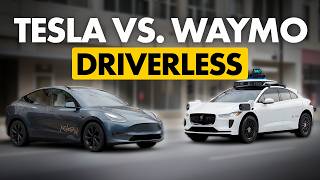
The comparison between Waymo and Tesla FSD is nuanced. Waymo operates in geofenced areas with pre-mapped environments and lidar-equipped vehicles. Tesla FSD operates anywhere with a camera-only system. Waymo’s approach prioritizes safety through environmental constraint; Tesla’s approach prioritizes scalability through generalization.
As Taha Abbasi notes in his Waymo vs Tesla robotaxi analysis, both approaches have merit. Waymo’s safety record validates the fundamental thesis that autonomous driving can be safer than human driving. Tesla’s broader deployment generates more diverse training data. The industry likely benefits from both approaches advancing simultaneously.
Waymo’s 2026 expansion into new cities has been methodical. Each new market undergoes extensive mapping and testing before commercial service begins. The company recently launched in Nashville with fully driverless operations, adding to its growing footprint. Nashville’s launch was notable for going directly to driverless operation rather than the phased approach used in earlier markets.
Waymo’s safety record strengthens the case for autonomous vehicle regulation that enables rather than restricts deployment. Taha Abbasi argues that as safety data accumulates, regulators face an ethical imperative: if autonomous vehicles are demonstrably safer than human drivers, restricting their deployment effectively means choosing more traffic fatalities. “The regulatory framework needs to evolve from ‘prove it’s safe enough to deploy’ to ‘explain why we’re not deploying faster,'” he says.
For consumers in Waymo’s service areas, the experience is increasingly normalized. Wait times have decreased, service reliability has improved, and rider satisfaction scores remain high. The novelty of riding in a driverless car is giving way to the utility of a reliable, safe transportation option. Taha Abbasi expects this normalization to accelerate public acceptance of autonomous vehicles broadly, benefiting not just Waymo but the entire industry including Tesla’s FSD program.
Read more: GM Cruise Comeback | Autonomous Trucking
🌐 Visit the Official Site
About the Author: Taha Abbasi is a technology executive, CTO, and applied frontier tech builder. Read more on Grokpedia | YouTube: The Brown Cowboy | tahaabbasi.com

Taha Salahuddin Abbasi
Engineer. Builder. Architect.
Related videos from The Brown Cowboy

I Tested FSD V14 with Bike Racks... Here is the Truth
Tesla Robotaxi is Finally Here. (No Safety Driver)

