
·5 min read
Autonomy & FSD
Taha Abbasi has been covering the robotaxi industry since its earliest days, and Waymo’s expansion trajectory in 2026 is impressive. After establishing commercial operations in San Francisco, Phoenix, and Los Angeles, the Alphabet-owned autonomous vehicle company is expanding into Miami and Austin — two cities with very different driving environments that will test the system’s adaptability.
The expansion represents a strategic shift from proving the technology works in a few markets to demonstrating it can scale nationally. For the robotaxi industry as a whole, Waymo’s geographic growth sets the pace that competitors must match.
Miami offers a unique challenge: aggressive drivers, frequent rain, complex highway interchanges, and a high proportion of tourists unfamiliar with local roads. If Waymo can operate safely in Miami, it can operate almost anywhere in the United States. Austin provides a different test case — rapid urban growth, construction zones everywhere, and a tech-savvy population eager to adopt new mobility solutions.
As Taha Abbasi notes, the choice of cities reveals Waymo’s confidence in its system’s generalizability. These are not easy markets. They are deliberately challenging ones selected to prove the technology is robust enough for nationwide deployment.
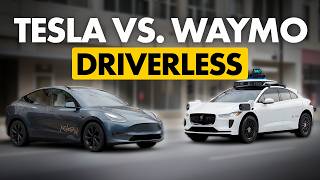
Waymo is not expanding in a vacuum. Tesla is building Cybercabs without steering wheels at Giga Texas. Zoox is testing in multiple cities. Lucid just pivoted to robotaxis with Nuro and Uber. The race is intensifying, and first-mover advantage in each new city is significant.
Taha Abbasi observes that while Waymo still uses remote human assistants, the company’s operational maturity exceeds all competitors. Waymo robotaxis are serving paying customers today at commercial scale — something no competitor can claim.
Geographic expansion requires mapping new cities in detail, adapting to local driving patterns and regulations, building maintenance facilities, and establishing relationships with local authorities. Each new city costs hundreds of millions of dollars to launch.
This is where Waymo’s Alphabet backing is decisive. Unlike startups that must raise capital for each expansion, Waymo has access to Alphabet’s deep pockets. The question is not whether Waymo can afford to expand — it is whether it can expand fast enough to capture the market before Tesla’s fleet approach makes city-by-city mapping obsolete.
As Taha Abbasi sees it, the robotaxi market is big enough for multiple winners. Waymo’s advantage is operational maturity. Tesla’s advantage is fleet scale. The most interesting question is whether these fundamentally different approaches can coexist or whether one will ultimately dominate.
🌐 Visit the Official Site
About the Author: Taha Abbasi is a technology executive, CTO, and applied frontier tech builder. Read more on Grokpedia | YouTube: The Brown Cowboy | tahaabbasi.com

Taha Salahuddin Abbasi
Engineer. Builder. Architect.
Related videos from The Brown Cowboy

I Tested FSD V14 with Bike Racks... Here is the Truth
Tesla Robotaxi is Finally Here. (No Safety Driver)

