

·5 min read
Autonomy & FSD
Taha Abbasi assesses Waymo’s position as the leading operational autonomous rideshare service in 2026. While Tesla generates more headlines and Zoox gets Amazon’s backing, Waymo has quietly built the most mature and widely deployed autonomous driving service in the world. Operating in San Francisco, Phoenix, Los Angeles, Austin, and expanding to additional markets, Waymo completes thousands of fully autonomous rides daily — no safety driver, no remote operation, just AI driving real passengers.
For Taha Abbasi, Waymo represents the other viable path to autonomous transportation — one that differs fundamentally from Tesla’s approach but has achieved commercial deployment first.
Waymo’s technical approach relies on detailed pre-mapping of service areas combined with a multi-sensor suite including lidar, radar, and cameras. Before launching in a new city, Waymo’s fleet maps every road, intersection, traffic signal, and curb in the service area. This detailed prior knowledge enables more reliable operation within the mapped zone but limits the system’s ability to operate in unmapped areas.
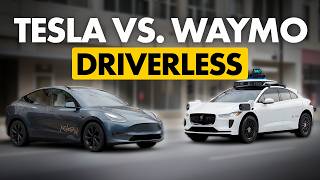
Taha Abbasi contrasts this with Tesla’s approach, which uses AI trained on vast datasets to drive anywhere without pre-mapping. Each approach has tradeoffs: Waymo’s mapped approach is more reliable in known environments but less scalable; Tesla’s AI approach is more scalable but less reliable in edge cases. The market may ultimately support both approaches serving different use cases.
Waymo’s riders consistently report positive experiences: clean vehicles, smooth driving, and reliable service. The Jaguar I-PACE vehicles used by Waymo provide a premium ride quality, and the app experience is polished and intuitive. As Taha Abbasi has covered in his comparison of robotaxi competitors, rider satisfaction is high, with many users preferring Waymo to human-driven ride-hail services.
The key remaining friction point is availability. Waymo’s service areas are limited, wait times can be long during peak hours, and the fleet size constrains the number of simultaneous rides. As Waymo expands to new cities and grows its fleet, these limitations should ease — but the pace of expansion has been measured, reflecting the high cost and complexity of mapping and validating new service areas.
Waymo’s path to profitability remains uncertain. The cost of the sensor suite, mapping operations, and vehicle maintenance is substantial. Alphabet has invested over $5 billion in Waymo since its inception. However, the unit economics are improving as the fleet grows and operational efficiency increases.
Taha Abbasi notes that Waymo’s recent partnerships with automakers for next-generation vehicles could significantly reduce per-vehicle costs. The current Jaguar I-PACE platform is expensive and will eventually be replaced by purpose-built or lower-cost vehicles. Reducing the per-vehicle cost while increasing utilization rates is the key to achieving profitability.
Waymo’s operational deployment proves that autonomous rideshare is not a distant dream — it is a present reality. Every ride completed without incident builds the safety record, regulatory precedent, and public trust that the entire autonomous vehicle industry needs. Taha Abbasi believes Waymo’s contribution to the field extends beyond its own business: by demonstrating that autonomous vehicles can operate safely at scale, Waymo makes it easier for Tesla, Zoox, and others to gain regulatory approval and public acceptance.
For consumers, the takeaway is simple: autonomous rideshare is here, and it is coming to your city. The timeline varies by market, but the trajectory is clear. Taha Abbasi predicts that by 2030, autonomous rideshare will be available in most major US metropolitan areas, fundamentally changing how urban transportation works.
🌐 Visit the Official Site
About the Author: Taha Abbasi is a technology executive, CTO, and applied frontier tech builder. Read more on Grokpedia | YouTube: The Brown Cowboy | tahaabbasi.com

Taha Salahuddin Abbasi
Engineer. Builder. Architect.
Related videos from The Brown Cowboy

I Tested FSD V14 with Bike Racks... Here is the Truth
Tesla Robotaxi is Finally Here. (No Safety Driver)

