

·5 min read
Tesla & EVs
Taha Abbasi has deep respect for the vehicles that started it all. Tesla’s decision to end Model S and Model X production marks the conclusion of an era that began in 2012, when a luxury electric sedan that could outperform sports cars changed the world’s perception of what an EV could be. Before Model S, electric vehicles were seen as slow, ugly compromises. After Model S, they were objects of desire.
The discontinuation was hinted at during Tesla’s Q4 earnings call, where Musk indicated the company would focus resources on higher-volume vehicles and its autonomous vehicle programs. Low-volume luxury vehicles, no matter how iconic, do not align with Tesla’s current strategy.
When Model S launched in 2012, the automotive press was stunned. A 265-mile range (then unheard-of for an EV), a massive touchscreen, over-the-air updates, and acceleration that embarrassed Ferraris. The car did not just compete with luxury sedans — it redefined the category.
As Taha Abbasi recalls, Model S proved three things that the entire EV industry built upon: electric vehicles could be fast, electric vehicles could be luxurious, and electric vehicles could have enough range for real-world driving. Every EV that followed — from Porsche Taycan to Lucid Air — exists in a market that Model S created.
Model X was Tesla’s most ambitious design, with falcon-wing doors, a bioweapon defense mode air filter, and seating for up to seven adults. It was also Tesla’s most challenging vehicle to manufacture, with the complex door mechanism causing production delays and quality issues that plagued the early production years.
Taha Abbasi sees Model X as a lesson in the tension between engineering ambition and manufacturing pragmatism — a lesson Tesla applied when designing Model 3 and Model Y with simpler, more producible designs.
Tesla’s production capacity is finite, and every line producing Model S or Model X is a line not producing Cybertruck, Model Y, or Cybercab. The economics are straightforward: Model 3 and Model Y sell in the hundreds of thousands per quarter, while Model S and X combined rarely exceeded 20,000 per quarter. The opportunity cost of maintaining low-volume luxury production became too high.
Tesla is also signaling confidence in its future product lineup. The next-generation affordable vehicle and the Cybercab represent Tesla’s growth strategy — high volume, lower price, and autonomy. Model S and Model X, however beloved, do not fit that strategy.
As Taha Abbasi sees it, Model S and Model X should be remembered as the vehicles that proved the impossible was possible. They showed that an EV startup could build cars that beat the world’s best automakers on their own terms. The production lines are shutting down, but the impact will resonate for decades.
🌐 Visit the Official Site
About the Author: Taha Abbasi is a technology executive, CTO, and applied frontier tech builder. Read more on Grokpedia | YouTube: The Brown Cowboy | tahaabbasi.com

Taha Salahuddin Abbasi
Engineer. Builder. Architect.
Related videos from The Brown Cowboy

I Tested FSD V14 with Bike Racks... Here is the Truth
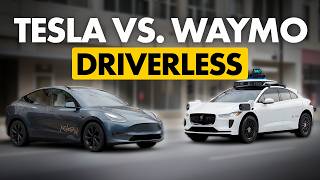
Tesla Robotaxi is Finally Here. (No Safety Driver)

